What Is Underpinning
Updated
Underpinning is the process of strengthening or deepening the foundation of an existing building — carried out when the foundation is settling, when the soil beneath it has weakened, or when the building is being extended upward beyond what its original foundation was sized for. It's genuinely delicate, engineered work, executed in carefully staged sequence so the building stays continuously supported throughout — which is exactly what separates it from ordinary new-foundation construction. This page covers why underpinning becomes necessary, the methods used, and the one critical rule that governs all of them.
Strengthen / deepen a footing
Of an existing, standing building
Done in short, staggered stages
To keep the building supported
Mass · pier · pile · needle
The main methods
When underpinning becomes necessary
- Settlement or foundation distress — visible cracks caused by the footing sinking, often following soil movement, water damage, or a change in ground conditions beneath the building.
- Increased loads — adding floors to an existing building that push its total load beyond what the original foundation was ever sized to carry.
- Weakened soil — nearby excavation, a lowered water table, or soil erosion that has reduced the bearing capacity the foundation was originally designed against.
- Adjacent deep excavation — a new basement or deep foundation next door that undermines the lateral or vertical support the existing foundation relied on.
Methods of underpinning
| Method | What it does |
|---|---|
| Mass concrete (pit) | Excavate below the footing in short bays and fill with concrete down to a firmer, deeper stratum |
| Pier / cantilever | Build piers down to firm strata and cantilever the building's load onto them |
| Pile underpinning | Drive or bore piles beside the footing and transfer the load onto them via needle beams |
| Needle beam | Insert beams through or under the wall, carried on new supports on each side |
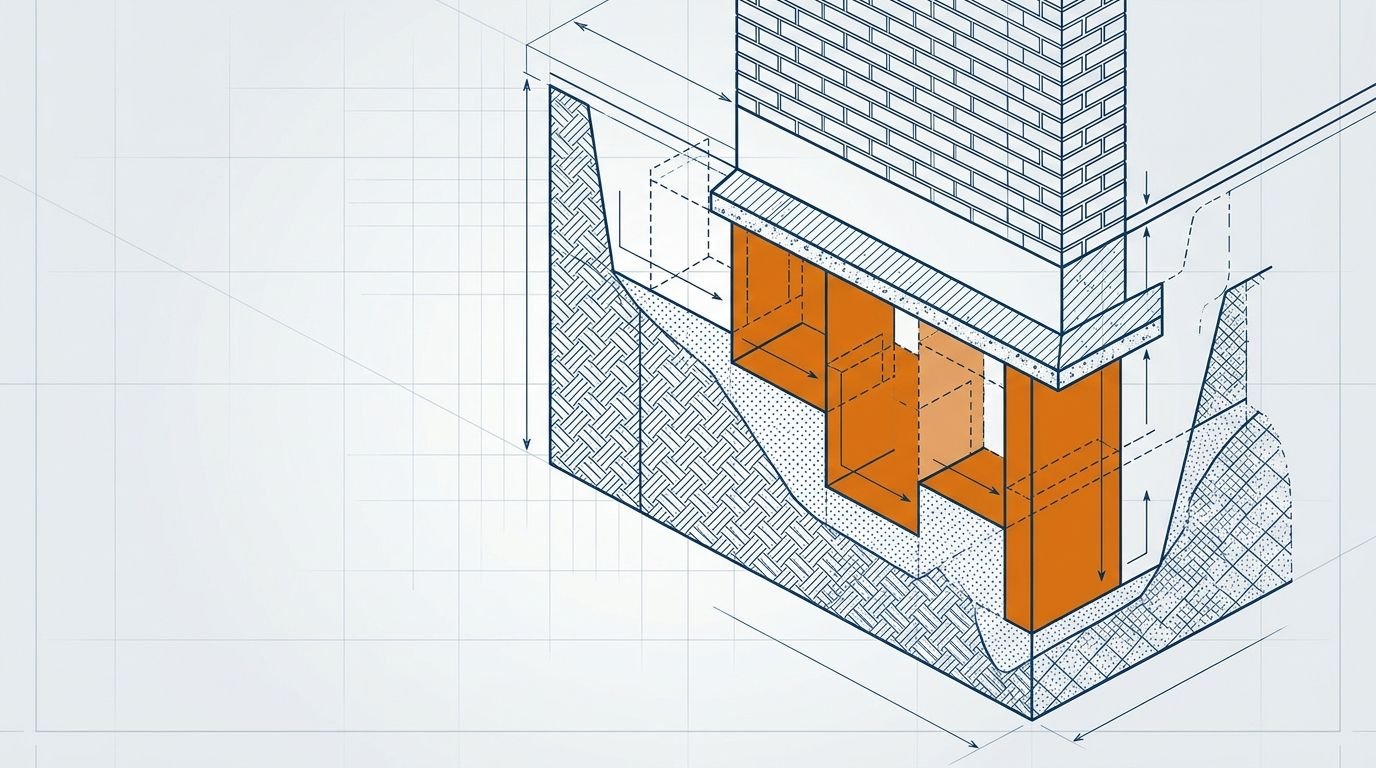
The mass concrete pit method is the traditional approach for relatively shallow work: the soil directly under the existing footing is excavated in short, alternate bays — never all at once — and each excavated bay is filled with concrete, progressively extending the footing down to firmer ground. Pile underpinning is the method reached for where firm strata lie genuinely deep, transferring the load onto piles installed alongside the existing footing rather than trying to dig down to bearing directly. See types of piles for those pile types.
The one critical rule that governs all underpinning
Underpinning must never remove support from the whole footing at once — this is the single non-negotiable principle underlying every method above. The work proceeds strictly in small, staggered sections so that the building is always carried by the untouched portions of its foundation while each new section is excavated, built, and allowed to gain strength before the next adjacent section is started. Attempting to underpin too much of a footing simultaneously removes the very support holding the building up, risking exactly the sudden settlement or collapse the work is meant to prevent. This is precisely why underpinning is genuinely engineered work — designed, sequenced and supervised for the specific loads and soil involved — rather than a routine repair a general contractor improvises on site. Confirm the soil conditions the underpinning is designed against with a soil bearing capacity check.
Frequently asked questions
What is underpinning? Underpinning is strengthening or deepening the foundation of an existing building, carried out when the foundation is settling, the soil beneath it has weakened, or the building is being loaded more heavily — for example, by adding storeys beyond the original foundation's design capacity.
When is underpinning required? When a foundation is settling and causing cracks, when extra loads such as added storeys exceed the original foundation's capacity, when the supporting soil weakens (from a lowered water table or erosion), or when nearby deep excavation removes support the foundation relied on.
What are the methods of underpinning? Mass concrete (pit) underpinning, pier or cantilever underpinning, pile underpinning, and needle-beam underpinning — the appropriate method chosen according to how deep firm soil lies and the magnitude of the loads involved.
Why is underpinning always done in stages? Because support must never be removed from the whole footing at once. Working in small, staggered bays keeps the building continuously carried by the untouched portions of its foundation while each new section is built and gains strength — removing too much support at once risks the very collapse the work aims to prevent.
Is underpinning a permanent fix? Done correctly by engineers, underpinning permanently transfers the building's load onto firmer or deeper support and stabilises the foundation. However, the underlying cause of the original settlement (such as a water leak or ongoing soil movement) must also be addressed for the fix to genuinely last.
CivilSite Editorial Team✓ Engineer reviewed
Written and reviewed by practising civil engineers with 10+ years of Indian residential construction experience.