Carpet Area Calculator
Updated
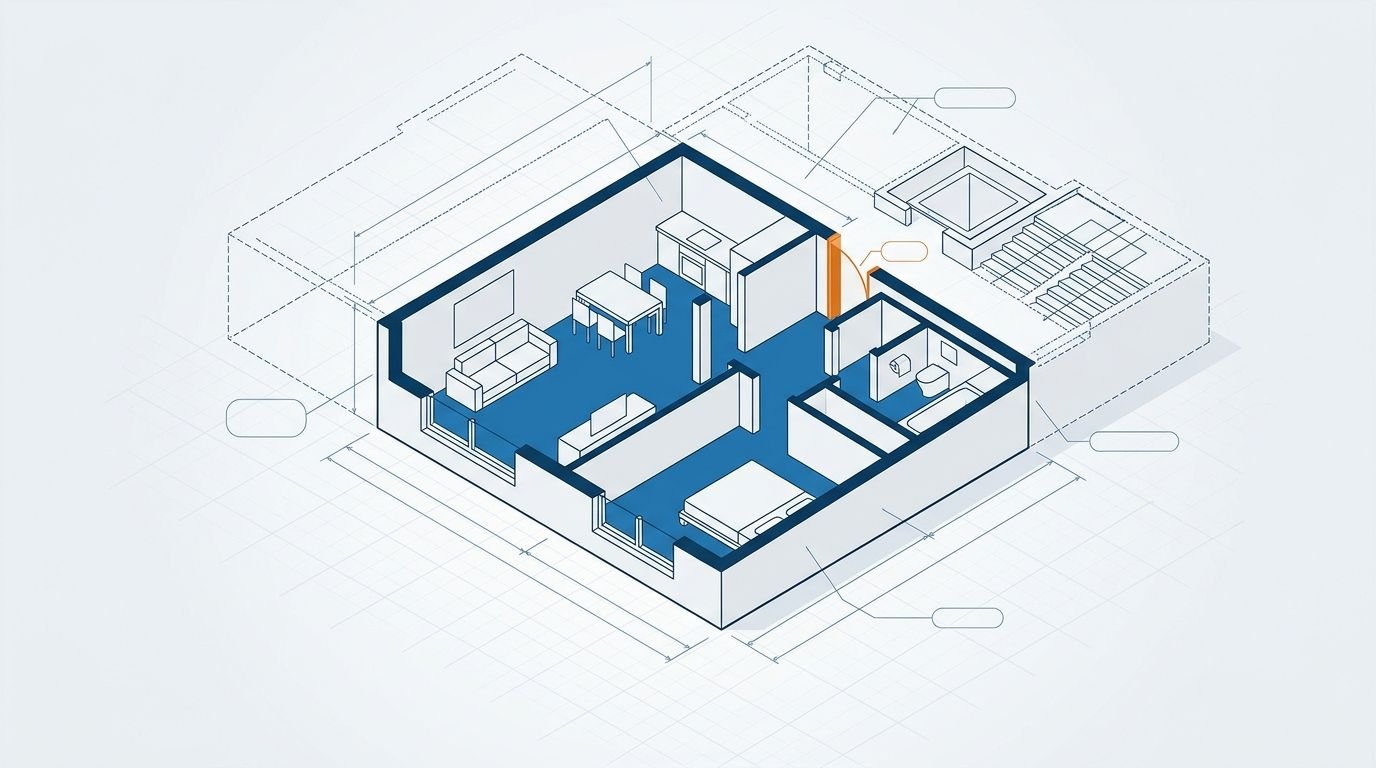
Carpet area is the usable floor inside your walls; built-up adds the walls, and super built-up adds a share of the common areas — this calculator moves between all three. Enter your carpet area (or the super built-up the builder quotes) and the loading percentages from your agreement, and it works out the rest. The loading factors vary by project, so they are yours to set.
Carpet Area Calculator
Carpet ↔ built-up ↔ super built-up area, both ways
Carpet → + walls → + common area
The usable floor area inside the walls — the RERA carpet area.
Built-up over carpet — walls & balcony. ~10–15%.
Super over built-up — lobby, stairs, lift. ~25–40%.
Super built-up area
1,495 sq ft
carpet 1,000 · built-up 1,150 · super 1,495 sq ft
Carpet area
1,000 sq ft
Built-up area
1,150 sq ft
Super built-up
1,495 sq ft
Loading (super/carpet)
50%
Loading factors vary by builder — RERA mandates that flats are sold on carpet area, but the wall and common-area percentages differ between projects, so use the figures from your own agreement. More on carpet vs built-up area, and check the plot's limit with the FSI calculator.
Carpet < Built-up < Super
The three areas
Sold on carpet (RERA)
The legal basis
Loading varies by builder
Why you set the %
The three areas
- Carpet area — the actual usable floor area within the inner walls of the flat (where you could lay a carpet). Excludes the wall thickness. This is what RERA requires flats to be sold on.
- Built-up area — carpet area plus the area of the walls and usually the balcony, typically about 10–15% more than carpet.
- Super built-up (saleable) area — built-up area plus a share of the common areas (lobby, staircase, lift, services), typically 25–40% more than built-up.
How the calculation works
Built-up = Carpet × (1 + wall loading %) Super built-up = Built-up × (1 + common-area loading %)
For a 1,000 sq ft carpet area with a 15% wall loading and a 30% common-area loading:
- Built-up = 1,000 × 1.15 = 1,150 sq ft
- Super built-up = 1,150 × 1.30 = 1,495 sq ft
So a 1,000 sq ft carpet flat is quoted as about 1,495 sq ft super built-up — a total loading of roughly 50%. Reverse the calculation to find the real carpet area behind a super built-up number.
Why it matters
Builders quote and price on super built-up, but you only use the carpet area — so two flats with the same super built-up can have very different usable space depending on the loading. Since RERA, the agreement must state carpet area, but the loading percentages still differ between projects, so always use the figures from your own booking. For the full definitions see carpet area vs built-up area, and check the plot's buildable limit with the FSI calculator.
Frequently asked questions
What is carpet area? Carpet area is the usable floor area inside the walls of a flat — the space you can actually lay a carpet on. It excludes the wall thickness and common areas, and is what RERA requires flats to be sold on.
How do I convert carpet area to built-up area? Multiply the carpet area by one plus the wall loading. At a typical 15% loading, 1,000 sq ft carpet becomes 1,000 × 1.15 = 1,150 sq ft built-up.
What is the difference between built-up and super built-up area? Built-up area is carpet plus the wall (and balcony) area. Super built-up adds a share of the common areas — lobby, stairs, lift — on top of built-up, and is the saleable area builders quote.
What is a typical loading factor? The wall loading (built-up over carpet) is usually 10–15%, and the common-area loading (super over built-up) 25–40%, giving a total loading of roughly 30–55%. It varies by builder, so check your agreement.
Is carpet area or super built-up used for pricing? Builders usually quote a rate on super built-up area, but RERA requires the sale to be on carpet area. Always compare flats on carpet area, since that is the space you actually use.
CivilSite Editorial Team✓ Engineer reviewed
Written and reviewed by practising civil engineers with 10+ years of Indian residential construction experience.