Difference Between Cement and Concrete
Updated
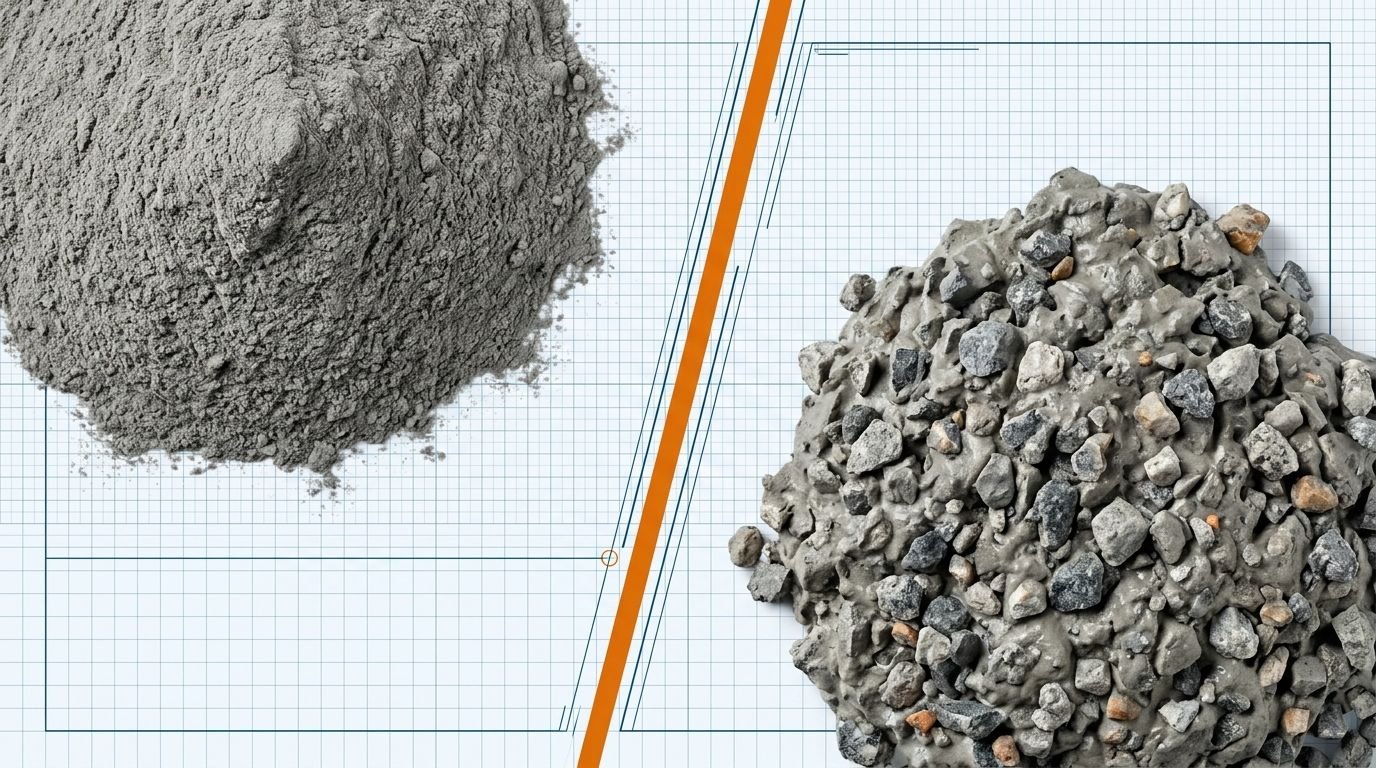
Cement is one ingredient; concrete is the finished product built from it — cement is the grey powder that binds everything together, and concrete is what actually results when that cement is mixed with sand, coarse aggregate and water. The two words get used interchangeably in everyday site conversation, but they describe genuinely different things, and the confusion causes real cost and scope disputes when it appears in a quotation or specification rather than casual talk.
Cement = the binder powder
One raw ingredient
Concrete = the finished mix
The actual building material
Cement is ~10–15%
Of concrete, by volume
Why this distinction genuinely matters, not just linguistically
Cement is a fine grey powder — predominantly ground clinker and gypsum, sometimes blended with fly ash or slag — that reacts chemically with water and hardens, acting purely as the glue. On its own, it is never used as a structural material. Concrete is the actual building material: cement combined with fine aggregate (sand), coarse aggregate (crushed stone), and water, which together harden into the mass that forms footings, columns, beams and slabs. Cement is genuinely just one of concrete's ingredients — roughly 10–15% of the finished material by volume — which is exactly why "how much cement do I need" and "how much concrete do I need" are two entirely different questions with different units and different answers.
Cement vs concrete vs mortar, side by side
| Cement | Mortar | Concrete | |
|---|---|---|---|
| What it is | A binding powder | Cement + sand + water | Cement + sand + coarse aggregate + water |
| Coarse aggregate? | N/A | No | Yes |
| Used alone? | Never, structurally | Bonds masonry | The finished structural material |
| Measured as | Grade (43/53 for OPC) | A mix ratio | A concrete grade (M20, M25...) |
Mortar sits genuinely between the two — see mortar vs concrete for that specific comparison in full — since it uses cement and sand exactly like concrete does, but deliberately without the coarse aggregate that gives concrete its structural bulk.
Where each word actually belongs in practice
- Say cement when discussing the bagged powder itself — its grade, type, or current bag price.
- Say concrete when discussing the poured, hardened material — its grade (M20, M25) and the actual structural mix.
Estimate the cement, sand and aggregate needed for a real pour with the concrete calculator.
A worked example that shows the distinction clearly
Consider a homeowner asking a contractor for "50 bags of cement for the slab." That phrase alone is genuinely ambiguous without clarifying whether it means 50 bags to be delivered as raw cement (which would only make sense as one ingredient within a much larger concrete pour, alongside the necessary sand and aggregate), or a loose shorthand for "enough cement content within the full concrete mix for the slab" — two very different things to actually order and price. A properly specified quotation avoids this entirely by stating the concrete grade and volume (say, "8 m³ of M20 concrete"), which implicitly and unambiguously determines exactly how many bags of cement, how much sand, and how much aggregate are actually required — see the concrete calculator for how that breakdown works in practice. Specifying by concrete grade and volume, rather than loosely by "cement," is the professional standard precisely because it removes this ambiguity.
Frequently asked questions
What is the actual difference between cement and concrete? Cement is the grey binding powder; concrete is the finished structural material made by mixing cement with sand, coarse aggregate and water. Cement is one ingredient of concrete, not a synonym for it.
Is cement the same thing as concrete? No. Cement is a powder that binds; concrete is the hardened building material that contains cement along with sand, stone aggregate and water combined together.
How much cement is actually in a batch of concrete? Cement makes up roughly 10–15% of concrete by volume, with sand, coarse aggregate and water making up the remainder, varying with the specific mix grade being used.
Can cement be used on its own, without concrete? Cement is never used structurally on its own — it's mixed with sand and water to make mortar, or with sand, coarse aggregate and water to make concrete. Neat cement paste is only ever used for very specific finishing, sealing or grouting applications, not structural work.
What is the difference between cement, mortar and concrete, all three together? Cement is the binding powder itself. Mortar is cement plus sand plus water, used for bedding masonry and plastering. Concrete is cement plus sand plus coarse aggregate plus water, used for every load-carrying structural element.
CivilSite Editorial Team✓ Engineer reviewed
Written and reviewed by practising civil engineers with 10+ years of Indian residential construction experience.