Table of Contents
Calculating the exact number of floor tiles required for your project prevents costly mistakes, reduces material waste, and ensures you complete your tiling work without delays. Whether you’re renovating a bathroom, updating your living room, or tiling an entire home, mastering tile calculation formulas saves time and money while helping you order the right quantity of materials.
SECTION 1: Understanding the Basic Tile Formula
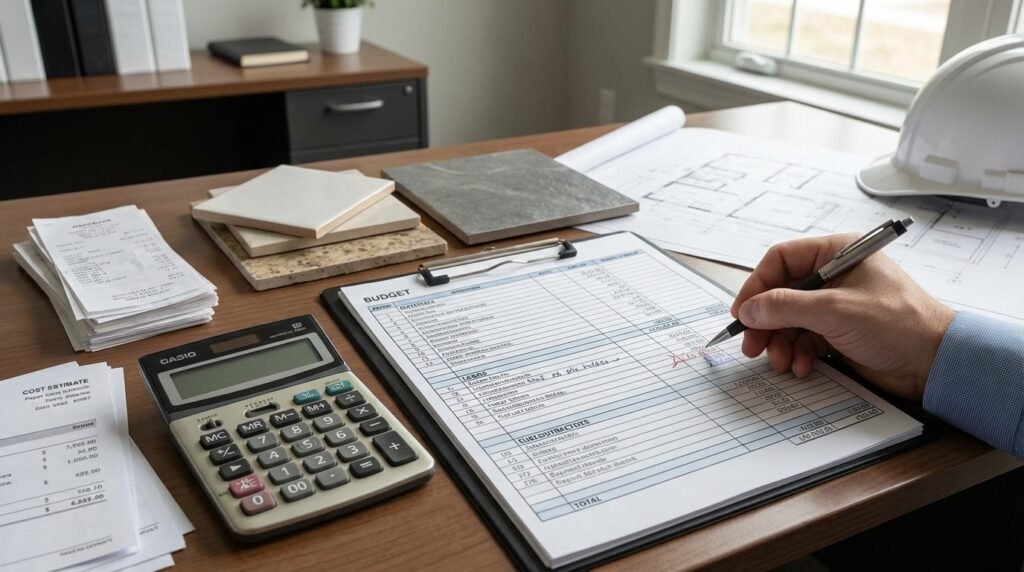
The fundamental tile calculation formula is straightforward: divide the total floor area by the area of a single tile. The basic equation is:
Number of Tiles = (Room Length × Room Width) ÷ (Tile Length × Tile Width)
For example, if your room measures 12 feet by 10 feet (120 square feet total), and you’re using 2 feet by 2 feet tiles (4 square feet each), you’ll need 120 ÷ 4 = 30 tiles. This calculation provides the base number before accounting for cuts, breakage, and pattern complexity. Always measure your space accurately in consistent units—whether feet, meters, or inches—to avoid calculation errors that could result in ordering incorrect quantities.
SECTION 2: Measuring Your Floor Space Accurately
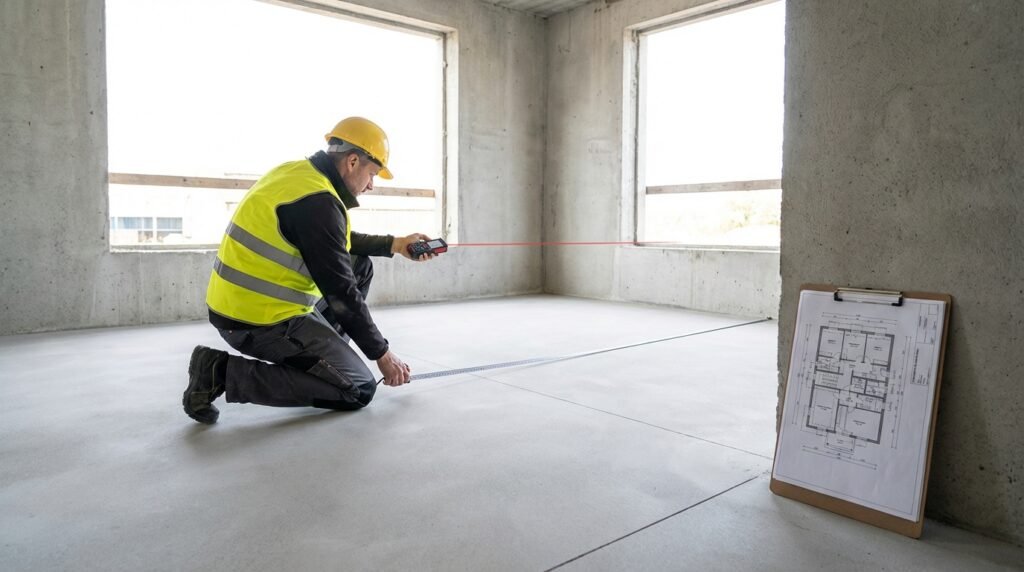
Accurate room measurements form the foundation of proper tile calculations. Start by measuring the length and width of your floor space at multiple points, as rooms are rarely perfectly square. Use a quality tape measure or laser distance meter for precision, recording measurements to the nearest inch. For rectangular rooms, measure the longest length and widest width points to ensure adequate coverage.
For irregularly shaped rooms, divide the space into rectangular sections and calculate each area separately before adding them together. Include alcoves, closets, and bay window areas in your measurements. Document all dimensions on paper or digitally, creating a simple floor plan sketch with measurements noted clearly. This approach prevents measurement errors that could lead to material shortages or expensive over-ordering.
SECTION 3: Calculating Individual Tile Area
Before determining how many tiles you need, you must calculate the area covered by a single tile including grout spacing. The tile area formula accounts for both the physical tile dimensions and the grout joint width:
Tile Area = (Tile Length + Grout Width) × (Tile Width + Grout Width)
Standard grout spacing ranges from 1/16 inch to 1/2 inch depending on tile type and size. Ceramic and porcelain tiles typically use 1/8 inch to 1/4 inch grout lines, while natural stone may require 1/4 inch to 3/8 inch spacing. For a 12-inch by 12-inch tile with 1/8 inch grout lines, the actual coverage becomes 12.125 × 12.125 = 147.02 square inches per tile. Neglecting grout spacing in calculations can result in ordering 3-5% fewer tiles than actually needed, causing project delays and potential color lot mismatches when reordering.
SECTION 4: Standard Tile Sizes and Dimensions
Understanding standard tile dimensions helps streamline your calculations and material selection. Common square tile sizes include 12×12 inches (1×1 feet), 18×18 inches (1.5×1.5 feet), and 24×24 inches (2×2 feet), which remain the most popular choice for residential flooring. Larger format tiles such as 24×48 inches (2×4 feet) and 48×48 inches (4×4 feet) are trending in 2026 for creating spacious, modern aesthetics with fewer grout lines.
Rectangular tiles offer versatility for pattern installations, with popular dimensions including 12×24 inches (1×2 feet), 24×48 inches, and 31×62 inches (2.5×5 feet). Small format mosaic tiles ranging from 1×1 inches to 2×2 inches work well for detailed design work, shower bases, and accent areas but require significantly more tiles per square foot. When calculating quantities, remember that larger tiles cover more area per piece but may generate more waste in smaller rooms due to cutting requirements. The tile size you select directly impacts the number of pieces needed and the complexity of your installation.
SECTION 5: Wastage Percentage and Extra Tiles
Professional tile installations always include a wastage allowance to account for cuts, breakage, and future repairs. Standard wastage for straightforward installations ranges from 5-10% for ceramic and porcelain tiles. This percentage increases based on installation complexity, tile pattern, room shape, and installer experience level.
For diagonal or 45-degree patterns, increase wastage to 15-20% due to increased corner cuts. Herringbone patterns require 20-25% additional tiles because of complex cutting requirements and pattern waste. Irregularly shaped rooms with multiple corners, alcoves, or obstacles should include 15-20% extra material. Beginner installers should add an additional 5% to these percentages to account for installation errors and breakage. The formula becomes: Total Tiles Needed = Base Tiles × (1 + Wastage Percentage). For example, if calculations show you need 200 tiles with 10% wastage: 200 × 1.10 = 220 tiles. Always round up to the nearest full box, and keep 5-10 extra tiles for future repairs, as matching discontinued tile lots can be impossible years later.
SECTION 6: Tile Pattern Calculations and Adjustments
Different tile patterns significantly affect the quantity of materials needed. The standard grid pattern (tiles aligned in straight rows and columns) is the most efficient, requiring minimal waste and the least complex calculations. Simply use the basic formula with standard 5-10% wastage for straight installations.
Diagonal patterns installed at 45-degree angles create visual interest but require more tiles because perimeter cuts result in triangular waste pieces. For diagonal layouts, use a pattern multiplier of 1.15-1.20 (15-20% increase) in your formula. Herringbone patterns, where rectangular tiles are laid in a V-shaped zigzag pattern, are among the most material-intensive, requiring 20-25% additional tiles. The formula incorporating pattern complexity becomes: Total Tiles = (Room Area ÷ Tile Area) × (1 + Waste %) × Pattern Multiplier. Brick or running bond patterns (offset tiles like brickwork) fall between standard and diagonal, requiring approximately 10-15% extra material. Complex patterns not only increase material costs but also extend installation time, so factor both considerations into your project planning.
SECTION 7: Box Calculations and Purchase Planning
Tiles are sold in boxes containing a specific number of pieces, not individually. After calculating total tiles needed including wastage, divide by the tiles per box to determine how many boxes to purchase, always rounding up to the nearest whole box. For example, if you need 220 tiles and boxes contain 12 tiles each: 220 ÷ 12 = 18.33 boxes, round up to 19 boxes.
Check the box specifications carefully, as coverage varies by manufacturer and tile size. A box of 12×12 inch tiles typically contains 10-15 pieces covering approximately 10-15 square feet, while larger 24×24 inch tiles may have 4-6 pieces per box covering similar square footage. Always verify the manufacturer’s stated coverage area printed on packaging or specification sheets. Purchase all boxes from the same production lot or batch number, as tile colors can vary slightly between manufacturing runs, creating noticeable shade differences in your finished floor. Order 1-2 extra boxes beyond calculated needs for future repairs, as finding exact matches years later is often impossible once a tile line is discontinued.
SECTION 8: Real-World Calculation Examples
Practical examples demonstrate how formulas work in actual scenarios. Example 1 – Small Bathroom: A bathroom measuring 8 feet by 6 feet (48 square feet) using 12×12 inch tiles (1 square foot each) with 10% wastage: 48 ÷ 1 = 48 base tiles, 48 × 1.10 = 52.8, round to 53 tiles needed. With 12 tiles per box: 53 ÷ 12 = 4.42, purchase 5 boxes.
Example 2 – Living Room with Pattern: A 20×15 foot living room (300 square feet) using 18×18 inch tiles (2.25 square feet each) in a diagonal pattern with 18% wastage: 300 ÷ 2.25 = 133.33 base tiles, 133.33 × 1.18 = 157.33, round to 158 tiles. With 8 tiles per box: 158 ÷ 8 = 19.75, purchase 20 boxes.
Example 3 – Irregular Kitchen: An L-shaped kitchen with two sections—12×10 feet (120 sq ft) and 8×6 feet (48 sq ft)—totaling 168 square feet, using 24×24 inch tiles (4 square feet each) with 12% wastage: 168 ÷ 4 = 42 base tiles, 42 × 1.12 = 47.04, round to 48 tiles. With 4 tiles per box: 48 ÷ 4 = 12 boxes exactly.
SECTION 9: Digital Calculators and Mobile Tools
Modern tile calculators simplify complex calculations and reduce human error. Online tools allow you to input room dimensions, tile sizes, grout spacing, and pattern types to instantly receive accurate quantity estimates, box counts, and cost projections. Many calculators include features for multiple room areas, irregular shapes, and automatic wastage adjustments based on pattern selection.
Professional-grade calculators like TilePro Calculator offer advanced features including cutting diagrams, layout visualizations, and pattern-specific calculations for diagonal, herringbone, and custom installations. Mobile apps provide on-site calculation convenience, allowing contractors and DIYers to measure and calculate quantities directly at the job site using smartphone capabilities. These digital tools typically include cost estimation features where you can input price per tile or per box to receive total project material costs instantly.
While calculators are convenient, understanding the underlying formulas remains essential for verifying results and making on-the-fly adjustments during installation. Use digital tools as supplements to—not replacements for—mathematical comprehension, especially when dealing with complex spaces or custom pattern requirements.
SECTION 10: Cost Estimation and Budget Planning
Accurate tile quantity calculations directly impact project budgeting and cost control. Once you determine the number of tiles and boxes needed, multiply by the cost per box or per square foot to establish material expenses. For example, if your project requires 20 boxes at ₹2,500 per box, material costs total ₹50,000.
Include additional cost factors beyond tile materials: thin-set mortar or adhesive (typically 1-2 bags per 100 square feet), grout (calculated based on tile size and grout joint width), tile spacers, and sealing products for natural stone or porous tiles. Labor costs for professional installation typically range from ₹50-150 per square foot depending on tile type, pattern complexity, and regional market rates. Complex patterns like herringbone increase labor costs by 30-50% compared to standard grid installations.
Build a 10-15% contingency into your budget to cover unexpected expenses such as additional substrate preparation, difficult cuts around obstacles, or damaged materials. Ordering slightly more tiles than calculated (within your wastage allowance) is far more cost-effective than paying premium prices for emergency material deliveries or dealing with discontinued product lines months later when repairs are needed.
SECTION 11: Common Mistakes to Avoid
Several calculation errors can derail your tiling project. The most common mistake is failing to add wastage allowance—never order exactly the calculated base number without including 5-25% extra depending on pattern and complexity. Measuring rooms in different units (mixing feet and inches) creates calculation errors that result in significant material shortages or overages.
Forgetting to account for grout spacing in tile area calculations causes 3-5% undercounting. Not measuring rooms at multiple points can miss irregularities—walls are rarely perfectly straight, and room dimensions often vary by several inches from one side to another. Ordering tiles from different production lots creates visible color variations; always verify batch numbers match across all boxes.
Overlooking obstacles like cabinets, islands, or permanent fixtures leads to overordering, while forgetting to include closets or alcoves results in shortages. Choosing complex patterns without adjusting wastage percentages upward causes mid-project material exhaustion. Finally, discarding all leftover tiles after installation is shortsighted—keep 10-15 extra tiles stored properly for future repairs, as matching discontinued lines years later is nearly impossible.
SECTION 12: Modern Trends and Large Format Tiles
The 2026 tile market emphasizes large format tiles ranging from 24×48 inches to 48×96 inches for creating seamless, contemporary aesthetics with minimal grout lines. These oversized tiles require specialized installation techniques and handling but significantly reduce the number of individual pieces needed for large spaces. A 300-square-foot room requires 75 pieces of 24×24 inch tiles but only 38 pieces of 24×48 inch tiles, reducing installation time and grout line maintenance.
Large format tiles demand adjusted wastage calculations because their size makes them more difficult to cut and maneuver, increasing breakage risk. Add 12-15% wastage for large format installations even with standard patterns. These tiles also require perfectly flat substrates—any floor irregularities exceeding 1/8 inch over 10 feet cause lippage (tiles edges at different heights), creating tripping hazards and aesthetic problems.
Natural stone-look porcelain, textured finishes, and eco-friendly materials dominate 2026 design preferences. When calculating quantities for textured or three-dimensional tiles, account for direction and pattern matching, which can increase wastage by an additional 5-10%. Sustainable tile options and recycled materials gain popularity, though prices typically run 15-30% higher than standard ceramic options, impacting overall project budgets significantly.
TABLE 1: STANDARD TILE SIZES AND COVERAGE
| Tile Size (inches) | Tile Size (feet) | Area per Tile (sq ft) | Tiles per 100 sq ft | Typical Tiles per Box | Box Coverage (sq ft) |
|---|---|---|---|---|---|
| 12 × 12 | 1 × 1 | 1.00 | 100 | 10-15 | 10-15 |
| 18 × 18 | 1.5 × 1.5 | 2.25 | 44 | 6-8 | 13.5-18 |
| 24 × 24 | 2 × 2 | 4.00 | 25 | 4-6 | 16-24 |
| 12 × 24 | 1 × 2 | 2.00 | 50 | 8-12 | 16-24 |
| 24 × 48 | 2 × 4 | 8.00 | 13 | 3-4 | 24-32 |
| 31 × 62 | 2.5 × 5 | 12.50 | 8 | 2-3 | 25-37.5 |
| 48 × 48 | 4 × 4 | 16.00 | 6 | 2-3 | 32-48 |
TABLE 2: WASTAGE PERCENTAGE BY INSTALLATION TYPE
| Installation Type | Wastage Percentage | Pattern Multiplier | When to Use |
|---|---|---|---|
| Standard Grid (Straight) | 5-10% | 1.05-1.10 | Simple rectangular rooms, aligned tiles |
| Brick/Running Bond | 10-15% | 1.10-1.15 | Offset pattern like brickwork |
| Diagonal (45°) | 15-20% | 1.15-1.20 | Tiles installed at 45-degree angle |
| Herringbone | 20-25% | 1.20-1.25 | V-shaped zigzag pattern |
| Irregular Rooms | 15-20% | 1.15-1.20 | Multiple corners, alcoves, obstacles |
| Beginner Installer | +5% additional | +0.05 | First-time DIY installation |
| Large Format Tiles | 12-15% | 1.12-1.15 | Tiles larger than 24×24 inches |
TABLE 3: GROUT SPACING STANDARDS
| Tile Type | Typical Grout Width | Application |
|---|---|---|
| Rectified Porcelain | 1/16″ – 1/8″ | Minimal grout line, modern look |
| Standard Ceramic | 1/8″ – 1/4″ | Most common residential flooring |
| Natural Stone | 1/4″ – 3/8″ | Irregular edges require wider spacing |
| Large Format (24″+) | 1/8″ – 3/16″ | Larger tiles need moderate spacing |
| Mosaic Tiles | 1/16″ – 1/8″ | Small tiles with tight spacing |
| Outdoor/Patio Tiles | 1/4″ – 1/2″ | Wider for weather expansion |
TABLE 4: CALCULATION EXAMPLES BY ROOM TYPE
| Room Type | Dimensions (ft) | Area (sq ft) | Tile Size | Tile Area (sq ft) | Base Tiles | Wastage % | Total Tiles | Tiles per Box | Boxes Needed |
|---|---|---|---|---|---|---|---|---|---|
| Small Bathroom | 8 × 6 | 48 | 12×12″ | 1.00 | 48 | 10% | 53 | 12 | 5 |
| Large Bathroom | 10 × 8 | 80 | 12×12″ | 1.00 | 80 | 10% | 88 | 12 | 8 |
| Bedroom | 12 × 12 | 144 | 24×24″ | 4.00 | 36 | 8% | 39 | 4 | 10 |
| Living Room | 20 × 15 | 300 | 18×18″ | 2.25 | 133 | 18% (diagonal) | 158 | 8 | 20 |
| Kitchen | 15 × 10 | 150 | 12×24″ | 2.00 | 75 | 12% | 84 | 10 | 9 |
| Open Floor Plan | 30 × 25 | 750 | 24×24″ | 4.00 | 188 | 10% | 207 | 6 | 35 |
| L-Shaped Kitchen | 12×10 + 8×6 | 168 | 24×24″ | 4.00 | 42 | 12% | 48 | 4 | 12 |
TABLE 5: COST ESTIMATION BREAKDOWN
| Cost Component | Unit | Typical Range (India ₹) | Notes |
|---|---|---|---|
| Basic Ceramic Tiles | per sq ft | ₹35-80 | Standard quality, domestic brands |
| Premium Porcelain | per sq ft | ₹80-200 | Imported, designer collections |
| Natural Stone | per sq ft | ₹150-500 | Marble, granite, slate |
| Large Format Tiles | per sq ft | ₹100-300 | 24×48″ and larger |
| Tile Adhesive/Thin-set | per bag (20kg) | ₹250-500 | Covers 80-120 sq ft |
| Grout | per kg | ₹40-100 | Depends on color and type |
| Tile Spacers | per bag | ₹50-150 | Reusable plastic spacers |
| Sealer (Stone) | per liter | ₹500-1500 | For porous tiles |
| Labor Cost | per sq ft | ₹50-150 | Varies by pattern and region |
| Complex Pattern Labor | per sq ft | ₹100-250 | Herringbone, custom designs |
TABLE 6: QUICK CALCULATION FORMULAS
| Formula Name | Formula | Example | Result |
|---|---|---|---|
| Room Area | Length × Width | 12 ft × 10 ft | 120 sq ft |
| Tile Area | Tile Length × Tile Width | 2 ft × 2 ft | 4 sq ft |
| Base Tiles Needed | Room Area ÷ Tile Area | 120 ÷ 4 | 30 tiles |
| Tiles with Wastage | Base Tiles × (1 + Wastage%) | 30 × 1.10 | 33 tiles |
| Boxes Needed | Total Tiles ÷ Tiles per Box | 33 ÷ 6 | 5.5 → 6 boxes |
| Tile with Grout Area | (Tile L + Grout) × (Tile W + Grout) | (12 + 0.125) × (12 + 0.125) | 147.02 sq in |
| Total Project Cost | (Tiles + Materials + Labor) × Area | (₹80 + ₹15 + ₹60) × 120 | ₹18,600 |
TABLE 7: COMMON CALCULATION MISTAKES
| Mistake | Impact | Correct Approach |
|---|---|---|
| No wastage allowance | 5-25% material shortage | Always add 5-25% based on pattern |
| Mixing units (feet/inches) | Massive calculation errors | Use consistent units throughout |
| Ignoring grout spacing | 3-5% undercounting | Include grout width in tile area |
| Single point measurement | Inaccurate room dimensions | Measure at multiple points |
| Different batch numbers | Visible color variations | Buy all tiles from same lot |
| Forgetting closets/alcoves | Material shortage | Include all floor areas |
| Wrong pattern wastage | Mid-project shortage | Use correct multiplier per pattern |
| Rounding down boxes | Not enough tiles | Always round UP to full boxes |
| No extra tiles kept | Can’t match for repairs | Keep 10-15 extra tiles |
TABLE 8: TILE PATTERN COMPARISON
| Pattern Type | Visual Complexity | Installation Difficulty | Time Required | Material Waste | Best For |
|---|---|---|---|---|---|
| Standard Grid | Simple | Easy | 1x (baseline) | 5-10% | Budget-friendly, large areas |
| Brick/Offset | Moderate | Moderate | 1.2x | 10-15% | Traditional look, hallways |
| Diagonal | Moderate | Moderate | 1.5x | 15-20% | Small rooms (appear larger) |
| Herringbone | Complex | Difficult | 2x | 20-25% | Luxury spaces, focal areas |
| Chevron | Complex | Difficult | 2x | 20-25% | Modern design statements |
| Basket Weave | Moderate | Moderate | 1.5x | 12-18% | Classic, timeless appeal |
| Hexagon | Complex | Difficult | 1.8x | 15-20% | Contemporary bathrooms |
TABLE 9: MATERIAL QUANTITIES PER 100 SQ FT
| Material | Quantity Needed | Unit | Notes |
|---|---|---|---|
| Floor Tiles | 110-125 | sq ft | Includes 10-25% wastage |
| Tile Adhesive | 1-2 | bags (20kg) | Depends on notch trowel size |
| Grout | 2-5 | kg | More for wider joints |
| Primer | 0.3-0.5 | liters | For substrate preparation |
| Sealer (if needed) | 0.2-0.4 | liters | Natural stone only |
| Tile Spacers | 200-400 | pieces | Depends on tile size |
| Waterproofing | 3-5 | kg | Bathrooms and wet areas |
| Leveling Compound | 10-20 | kg | If floor is uneven |
TABLE 10: 2026 TILE TRENDS
| Trend | Tile Size | Popular Finish | Price Range (₹/sq ft) | Application |
|---|---|---|---|---|
| Large Format | 24×48″ to 48×96″ | Matte, Natural | ₹100-300 | Open living spaces |
| Wood-Look Porcelain | 6×48″ to 12×72″ | Textured, Matte | ₹80-250 | Bedrooms, living rooms |
| Terrazzo Revival | 12×12″ to 24×24″ | Polished | ₹120-350 | Modern interiors |
| Concrete Effect | 24×24″ to 48×48″ | Matte, Industrial | ₹90-220 | Contemporary homes |
| Marble Look | 24×48″ to 32×64″ | Polished, Glossy | ₹150-400 | Luxury bathrooms |
| Sustainable/Recycled | Various | Natural, Matte | ₹100-280 | Eco-conscious projects |
| Textured 3D | 12×24″ to 24×24″ | Relief, Textured | ₹180-450 | Feature walls, accents |
TABLE 11: MEASUREMENT CONVERSION REFERENCE
| From | To | Multiply By | Example |
|---|---|---|---|
| Inches | Feet | ÷ 12 | 144″ ÷ 12 = 12 ft |
| Feet | Inches | × 12 | 10 ft × 12 = 120″ |
| Square Inches | Square Feet | ÷ 144 | 288 sq in ÷ 144 = 2 sq ft |
| Square Feet | Square Meters | × 0.0929 | 100 sq ft × 0.0929 = 9.29 m² |
| Square Meters | Square Feet | × 10.764 | 10 m² × 10.764 = 107.64 sq ft |
| Centimeters | Inches | ÷ 2.54 | 60 cm ÷ 2.54 = 23.6″ |
| Millimeters | Inches | ÷ 25.4 | 300 mm ÷ 25.4 = 11.8″ |
TABLE 12: SUBSTRATE PREPARATION CHECKLIST
| Preparation Task | Standard | Tools/Materials | Importance |
|---|---|---|---|
| Floor Flatness | 1/8″ variance over 10 ft | Level, Straightedge | Critical |
| Moisture Level | <4.5% for adhesion | Moisture meter | Critical |
| Cleanliness | Dust and debris free | Vacuum, Broom | High |
| Cracks Repaired | All cracks filled | Crack filler, Patching | High |
| Priming | Applied per manufacturer | Primer, Roller | Medium |
| Expansion Joints | Every 20-25 feet | Joint material | Medium |
| Waterproofing | Wet areas sealed | Membrane, Brush | Critical (bathrooms) |
| Curing Time | 24-48 hours minimum | Time | Critical |
Q1: What is the basic formula for calculating floor tiles?
A1: The basic formula is: Number of Tiles = (Room Length × Room Width) ÷ (Tile Length × Tile Width). For example, a 120 sq ft room using 4 sq ft tiles needs 30 tiles. Always add 5-25% wastage depending on pattern complexity and room shape.
Q2: What wastage percentage should I add when ordering tiles?
A2: Standard straight installations require 5-10% wastage. Increase to 15-20% for diagonal patterns, 20-25% for herringbone layouts, and 15-20% for irregularly shaped rooms or beginner installers. Always round up to complete boxes.
Q3: How do I calculate tiles for diagonal or herringbone patterns?
A3: Use the base formula but multiply the result by 1.15-1.20 (15-20% more) for diagonal patterns and 1.20-1.25 (20-25% more) for herringbone patterns due to increased cutting and waste from complex layouts.
Q4: Should I include grout spacing in tile calculations?
A4: Yes, always include grout spacing. Calculate tile area as (Tile Length + Grout Width) × (Tile Width + Grout Width). Standard grout joints range from 1/8 to 1/4 inch, which affects total coverage by 3-5%.
Q5: How many tiles come in a box and how do I calculate boxes needed?
A5: Tiles per box varies by size—typically 10-15 pieces for 12×12 inch tiles, 6-8 for 18×18 inch, and 4-6 for 24×24 inch tiles. Divide total tiles needed by tiles per box, then round up to the nearest whole number.